Getting Your Books Investor‑Ready as an African Founder
Investors verify the numbers behind your deck before they invest. Here is what investor-ready books look like, the gap between having revenue and proving it, and how to close it before a raise rather than during one.
In this guide
A large part of a raise is decided after the pitch, when an investor asks for the numbers behind the deck. What you send back either confirms the story with clean, verifiable records or exposes traction you cannot prove. Investors verify before they commit, and your books are where that verification succeeds or fails. This is fixable, but only in advance.
The gap between having revenue and proving it
Many early companies have real traction. What they often lack is the ability to prove it to someone who is about to trust it with money, and that gap is where raises stall.
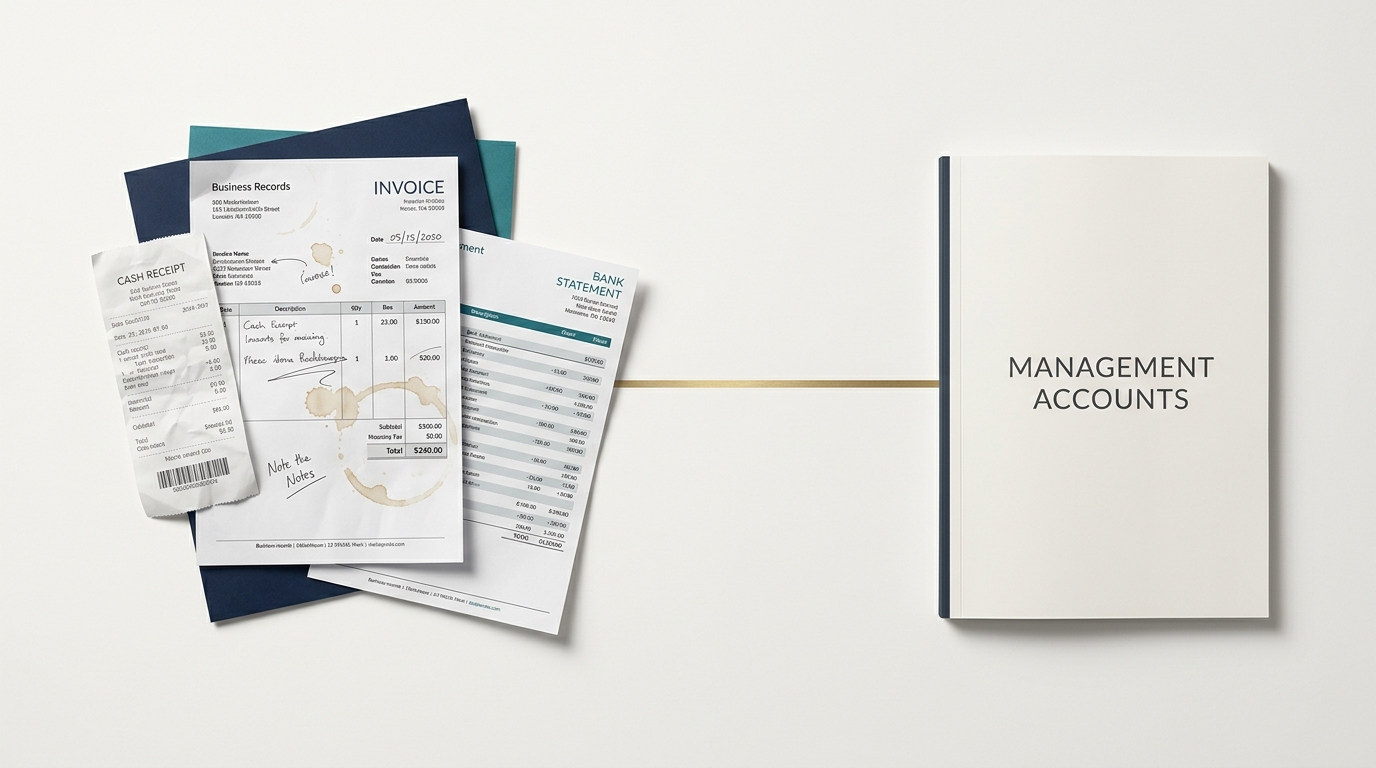
An investor’s accountant does not take the revenue figure on trust. They trace it: to invoices, to bank receipts, to a system that recorded it as it happened. If the numbers live in a spreadsheet updated from memory, or business and personal spending run through one account, there is nothing solid to trace, and every figure becomes a claim. Closing this gap is central to being investor-ready.
What investor-ready books look like
You do not need audited accounts to raise an early round. You need records that survive scrutiny. In practice:
- Business and personal money fully separate. The company has its own accounts, and personal spending never runs through them. Mixed accounts are one of the quickest ways to make a set of books untrustworthy.
- Proper accounting software, not a spreadsheet. Transactions recorded in a real system as they happen, so the history is complete rather than reconstructed later.
- A monthly close. Each month the books are reconciled against the bank and the payment processors and locked. This is what makes a figure reliable, and it cannot be reproduced after the fact.
- A sensible chart of accounts. Income and costs categorised so that a reader can see the shape of the business.
- Revenue you can trace. Each reported naira or dollar links back to an invoice and a receipt, with consistent, defensible revenue recognition.
With these in place, there is nothing in the books for due diligence to catch.
Why it cannot wait until the raise
Founders often decide to put the finances in order once they start raising, and find that a year of closed, monthly records cannot be produced in a fortnight. You cannot reconcile twelve months you never tracked, or separate accounts retroactively. The work has to have happened already.
This is why founders who raise smoothly treat bookkeeping as infrastructure rather than a pre-raise task. By the time an investor asks, the numbers are provable and the raise is not held up. Bookkeeping is also inseparable from your tax filings and, if you have taken foreign investment, your capital-importation records, which surface in the same due-diligence pass.
The cross-border layer
For founders operating across borders, clean has to hold in more than one place. Intercompany transactions between a parent and your Nigerian company must be recorded properly, foreign-currency revenue tracked accurately, and the records must match the company’s actual structure. Books that look tidy in isolation can still raise questions if they do not reconcile with how the company is set up. The standard is records that are verifiable, consistent, and matching reality across the whole structure.
Start before you need it
Getting your books investor-ready is unglamorous, ongoing work, and it is what turns traction into something an investor can rely on. It is done in the months before anyone asks, not in the week they do.
If you are heading toward a raise, or you suspect your records would not survive a close look, the time to act is while there is still history to build. Book a conversation and we will get your books to the standard where due diligence confirms your numbers. Building that position now costs far less than losing a round over it later.
FAQ
Frequently asked questions
What does it mean to have investor-ready books?
It means the finances survive scrutiny: business and personal money fully separate, transactions recorded in proper accounting software rather than a spreadsheet, books closed and reconciled every month, revenue traceable to real invoices and receipts, and reported figures that match the records. Every figure can be proved.
Why do investors care so much about my bookkeeping?
They are about to commit money on the basis of your numbers, and their first task is to confirm the numbers are real. If revenue and margins cannot be verified from clean records, every figure in the deck is unproven, and the process stalls at the first data request.
When should I get my books in order before raising?
Months before, not during. A year of clean, monthly records cannot be reconstructed in the week an investor asks for a data room. Founders who raise smoothly keep the books current as ongoing infrastructure, so the numbers are already provable when the time comes.
Can I get my books ready myself, or do I need help?
Early on, disciplined use of accounting software and a real monthly close go a long way. As revenue grows and a raise approaches, the judgement calls, how revenue is recognised, how items are categorised, and what an investor will question, are where a qualified accountant or CFO adds the most value, by catching problems before an investor does.